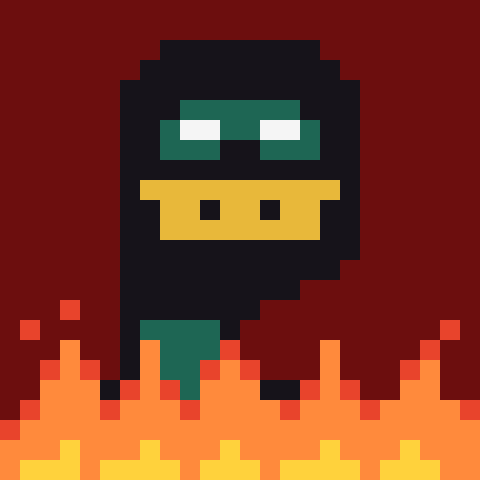
 THE NIGHT OWL
THE DOOR IS CLOSED · THE CHECKER IS ON
THE TABLE IS SET.
Whitelist signups are closed and the checker is live below. Paste your wallet, get a straight yes or no. Then the mint: 3,000 hand-pixeled weirdos. A little more cooking left.
MINTING ON ROBINHOOD CHAIN
NO COST · NO ROADMAP · JUST PONKS
THE NIGHT OWL
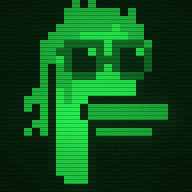 THE NEIGHBOR
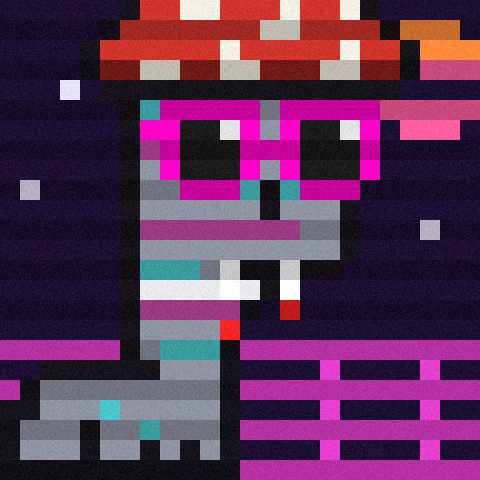 THE COUSIN
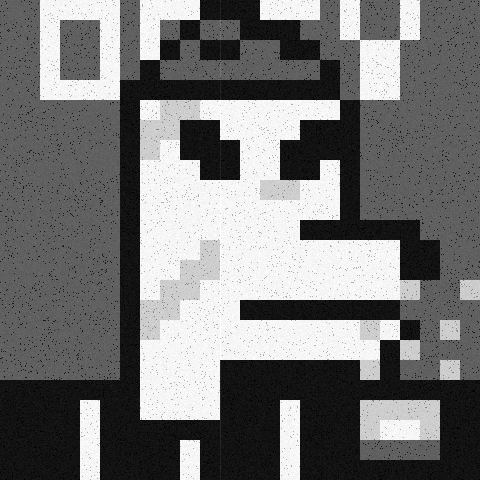 THE WEIRD ONE
CHECK YOUR SEAT.
The Ponk-O-Matic took its last application and powered down. Every entry that made it in before the cutoff is recorded, and the whitelist checker now hangs in its window: paste a wallet, get a straight yes or no. The mint is the next stop.
HOW THE LIST GOT FILLED
WHO GOT IN.
Three ways onto the list, and none of them cost anything. Snapshots nobody saw coming, the wallet form above while the door was open, and people we noticed showing up on X. Nothing to buy, nothing to farm.
SNAPSHOTS
We snapshotted wallets at random across NFT and token communities on Robinhood Chain. The criteria changed every time. A balance, how long you held it, something you were early to.
Nothing was announced before it happened, and the block was already gone by the time you heard about it, so there was nothing to position for.
THE FORM
The form above collected wallets while signups were open. If there are more entries than spots left, wallets get randomly selected. Adding an X name was optional, and it helped, because it gave us a second thing to look at.
SHOWING UP
The rest are hand picked. We watched who turned up on X, who talked about the art, and who was around before it was obvious. No points, no grinding, no daily check in.
We will try to keep the entire project WL only guaranteed mint, unless there is low interest and we are forced to make the mint public.
WHY PONKS EXIST
IT'S NOT THAT DEEP.
Ponks is a Punks inspired homage on Robinhood Chain. I started working on building some NFT tools for fun, and that transitioned into testing, drawing traits and eventually deciding to drop the full collection just for fun.
THE THREAD, WITH PICTURESHAND CRAFTED
Each Ponk is hand crafted. I built a suite of local tools that let me draw every trait on a 24×24 pixel canvas, set rarities, set trait combo, colour and opacity rules, demo collections, export metadata, generate images, and a bunch more. It started as boredom and grew into Ponks.
COMBINATION RULES
Trait layers can collide. A hood covers a hat. A beak covers a nose. A mask can't have a snout poking through it. Combination rules keep things clean. So far there are 96 rules and counting.
CONDITIONAL COLOURS
A bright yellow beak looks pasted on top of a ghost skin. Adding a second “ghost beak” trait would change the rarities, so instead a trait carries an alternate colourway that fires on whatever gets rolled. Spectral goes pale blue, undead green, invisible takes on opacity. The metadata stays the same. Only the paint changes.
NO IMAGE FILES
The art starts with no image files at all. The whole collection is a single text file. Every trait is a few strings, one character per pixel. A dot is transparent, K is the ink, S is whatever skin colourway gets rolled.
K and S aren't colours, they're slots, so the same three lines come out black-outlined on one Ponk and ghost-tinted on another. The engine stamps the layers back to front into a 24×24 grid, runs a texture pass over the result, then scales by whole numbers so the pixels stay square. Text in, image out.
TEXTURE
Texture is the last pass. Not a noise overlay. Each one is real processing over the final pixels. VHS pulls the colour channels apart and drags tracking bands down the frame. Halftone swaps every pixel for an ink dot sized to its brightness.
Each texture uses the other traits as its seed, so every speck and scratch is placed by that exact combination. No two Ponks share the same texture pattern, and each one renders identically every time.
RARITY
Rarity is built into the engine, and it is all weights. The higher the number the more common, the lower the more rare. The labels are for me on the back end. Weights are relative inside a category, and the rules affect the output.
A rainbow puke mouth is weighted for about 24 of 3,000, but it protrudes, so masks and helmets rule it out and it lands closer to 19 on a collection roll. That can make it rarer than what I set.